The Philippine priest of the docks
Jovannie Postrado looks after the crew members of big cargo boats calling at Algeciras Port
El párroco de los muelles (versión en español)
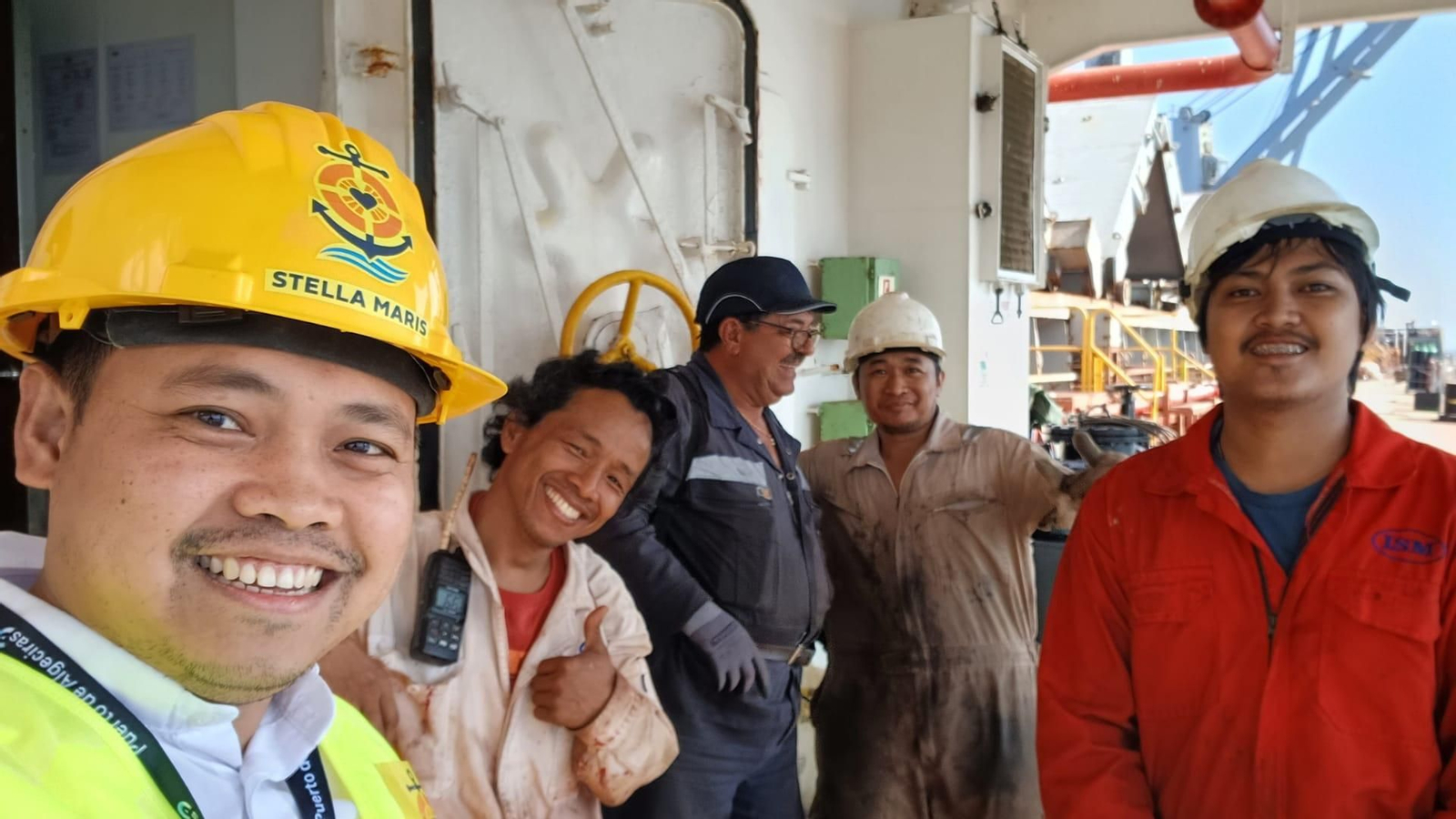
Jovannie Postrano is originally from the island of Cebu and, in addition to Cebuano, his mother tongue, he speaks Tagalog, English and Spanish. He has been living in the parish of Carmen of Algeciras for just a few months, but his mission is not on land, but aboard the large oil tankers or container ships that dock in the port. Every day, first thing in the morning, he checks an app to see which cargo ships will be calling at Algeciras, chooses the ones he will have time to visit, puts on his fluorescent vest and yellow safety helmet, and reports to the gangway of the selected ship. The sailor on duty, who has not been notified in advance, lets him board because he immediately recognises the emblem on his helmet: the organisation of this young priest, Stella Maris, is present in more than sixty countries and three hundred ports around the world.
Jovannie is always welcomed with joy and affection on ships. If, in addition to the usual philippines in the crews of these ships (25% of all crew members worldwide are philippine), the commanding officers also come from the Philippines, then it is likely that they will invite him to eat and spend the afternoon with them, and he may even end up celebrating mass for them in the ship's grandest hall. ‘They often go months and months without touching land, without setting foot on the ground, and they are very grateful for the visit of a compatriot who speaks to them in their language, who offers them information and help in whatever way we can, who listens to their problems, accompanies them, resolves any issues and, of course, provides spiritual care if they require it,’ Postrano explains to Europa Sur.
‘The atmosphere inside a cargo ship is not always easy,’ says this young priest who until recently lived in London: ‘Sailors have to live 24 hours a day with colleagues who are not always friendly, from different nationalities, cultures and religions, with whom they sometimes cannot even have a conversation because of the language barrier,’ he continues. The families of the crew members are also far away, which sometimes makes day-to-day life very difficult, he says. He also explains that many sailors give up the days off at home to which they are entitled after each voyage in order to remain on board and thus earn what they need to live and support their families; most of them earn a thousand pounds a month and the bulk of their wages goes directly to their homes in Manila, Cebu or Davao.
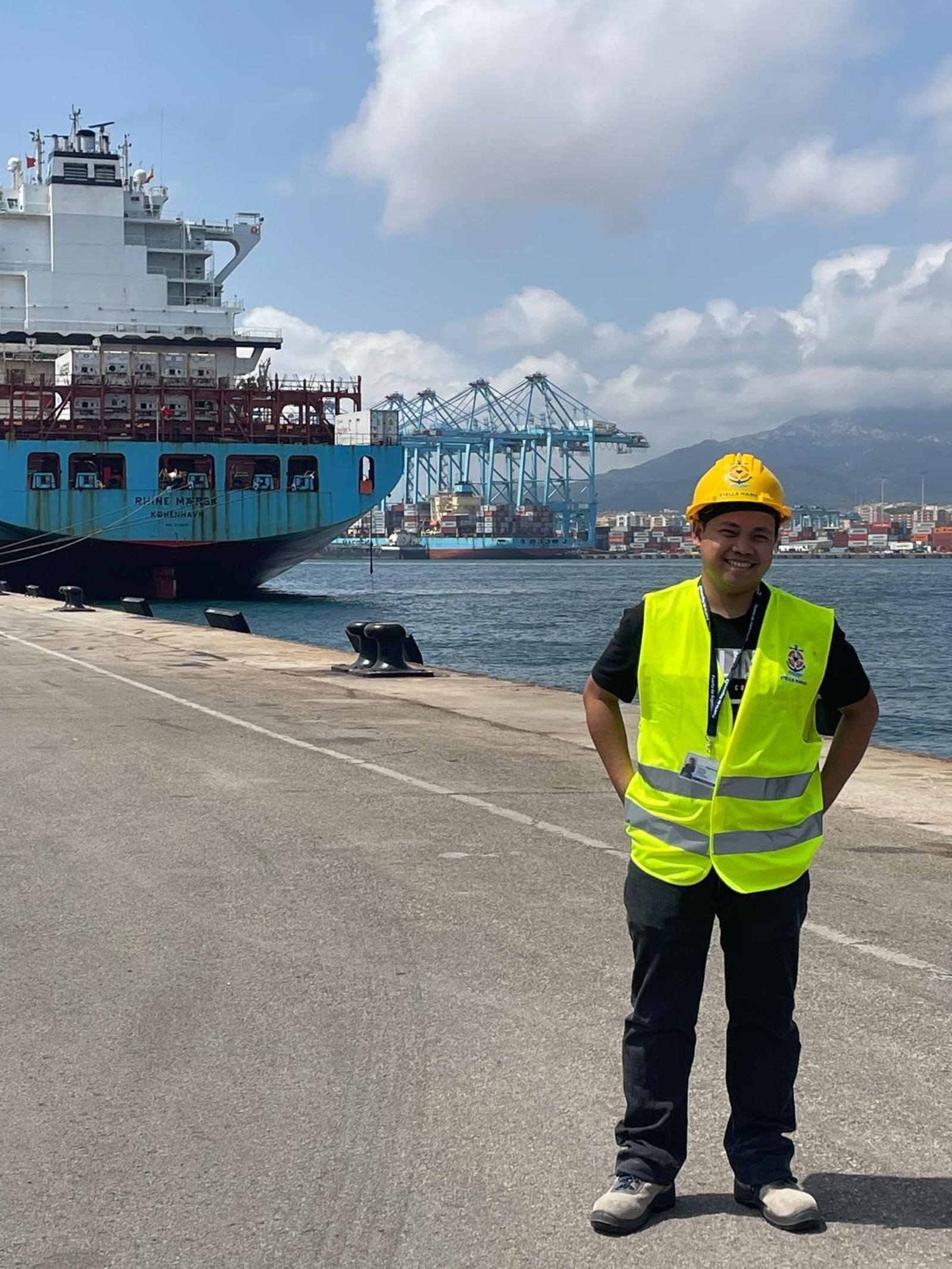
Stella Maris is an ecclesiastical service that has been operating since 1920 and is dependent on the episcopal conferences of each country. Its objective is to provide seafarers, through its centres, with the human and spiritual assistance they may need for their well-being during their stay in port, as well as support for their families. It is aimed at all seafarers of any race, nationality and gender, always respecting their culture, religion or ideology. ‘There are times when we facilitate contact with mosques and imams for muslim crew members who request it; our aim is to help everyone in any way we can.’
In some ports, they have premises or rooms where sailors can relax and meet people outside their everyday lives. In other centres, the priests, deacons and volunteers of this organisation even have small boats so that they can visit ships anchored offshore that do not dock at the quays. ‘Ships are spending less and less time in port; I often meet sailors who haven't set foot on land for more than six months,’ he laments. He adds, in conclusion: ‘We are newcomers to Algeciras: it seems incredible, but there was no one from Stella Maris in Spain's main port.’
También te puede interesar
Lo último